
Living Here • Buyer Due Diligence
Flood Insurance in Denver NC: A Homebuyer's Checklist
Before buying on Lake Norman’s west shore, separate mapped flood risk, lender requirements, insurance coverage, and the way water actually moves across a property.
Last reviewed October 2026
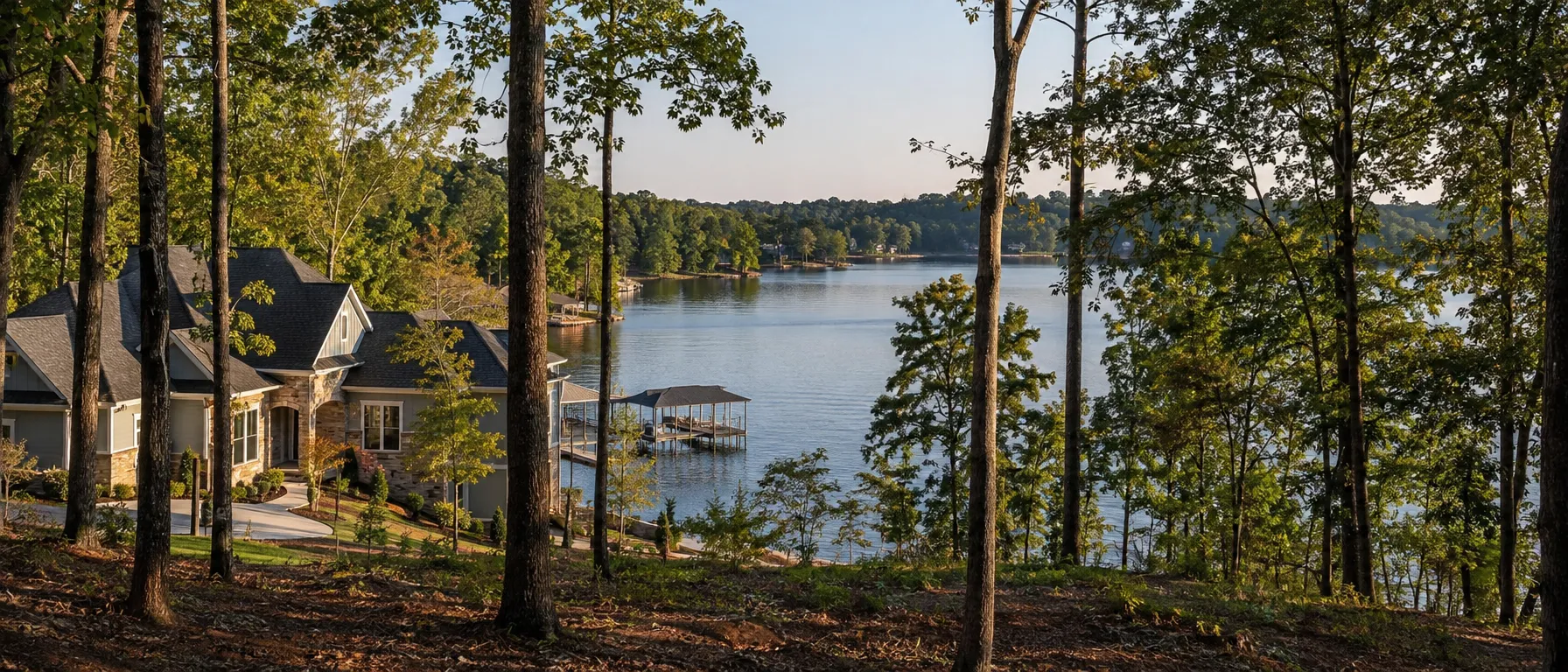
Flood insurance in Denver NC: start before you offer
When researching flood insurance in Denver NC, start with the exact property—not the assumption that a lakefront home needs coverage or an inland home does not. The useful questions are whether the building intersects a mapped flood hazard area, whether your lender requires a policy, what coverage is available, and what water-related damage that coverage would actually insure.
Denver is an unincorporated community in Lincoln County on Lake Norman’s west shore. For a property within Lincoln County, direct local floodplain and development questions to the county office responsible for floodplain administration, not a Town of Denver. Confirm the parcel’s jurisdiction rather than relying solely on its mailing address.
Begin this research before an offer when possible, and resolve significant uncertainties within your contractual investigation period. A reassuring map screenshot is not an insurance quote, and a seller’s current premium is not necessarily what you will pay. Give your lender and insurance agent the address early so unanswered questions do not arrive just before closing.
How to check a Denver NC property's FEMA flood zone
Use the FEMA Flood Map Service Center to locate the property and identify the effective Flood Insurance Rate Map. North Carolina’s Flood Risk Information System can provide additional mapping and risk context. Lincoln County parcel mapping helps establish which tract you are researching, but parcel lines and aerial photographs are not substitutes for a boundary or elevation survey.
Look at the building footprint, not just the parcel’s relationship to a shaded area. A large waterfront lot can include land in a mapped hazard area while the house sits elsewhere. Conversely, the street-facing portion may look unremarkable while a lower part of the building lies closer to a hazard boundary. Online overlays can have alignment limitations.
Zones beginning with A generally identify Special Flood Hazard Areas associated with the one-percent-annual-chance flood. Zone X can describe different categories of lower mapped risk, so read the legend rather than treating every X designation alike. The phrase '100-year flood' does not mean flooding happens only once a century.
Save the map panel information and ask whether an effective map amendment or revision affects the property. If preliminary mapping is available, distinguish it from the effective map used for current determinations. When a boundary appears close to the house, ask your lender and the county what documentation is needed to clarify it.
When lenders require flood insurance near Lake Norman
For many federally related mortgages, flood insurance is required when the building securing the loan is in a Special Flood Hazard Area in a participating community. Your lender obtains its own flood determination. Do not assume that your reading of a consumer map, or the seller’s previous loan arrangement, settles the requirement for your purchase.
A lender may also require coverage under its own underwriting standards even when a federal purchase requirement does not apply. Ask for the determination in writing, the minimum coverage required, and the deadline for providing acceptable insurance documentation. If you are considering private flood insurance, confirm the lender will accept the specific policy before committing to it.
Cash buyers are not subject to a mortgage lender’s insurance condition, but that does not make the property immune to flooding. Likewise, 'not required' is not the same as 'not worth considering.' A voluntary quote helps you evaluate whether transferring some of the risk makes sense alongside your savings, deductibles, and tolerance for an uninsured loss.
Lake Norman flood risk is more than a shoreline question
A house overlooking Lake Norman can face several distinct water exposures. Lake-related flooding is one question; runoff from uphill land, nearby streams, roadside ditches, and overwhelmed drainage features are others. An inland property can therefore deserve just as much drainage investigation as a waterfront property.
Lake Norman is a managed reservoir, but managed water levels do not establish that a particular structure is safe from flooding. Do not infer protection from an ordinary-day shoreline photograph or a seller’s description of typical lake levels. Ask the county floodplain administrator which mapped hazards and elevation information apply to the site.
Walk the property with the inspector and, when practical and safe, revisit after rain. Identify where roof runoff goes, whether grading directs water toward the foundation, and whether a downhill driveway channels water toward a garage. A dry showing does not answer those questions.
- Ask about prior water entry, drainage work, sump pumps, and repairs to lower-level finishes.
- Look for sediment trails, erosion, water staining, and discharge pipes; have qualified professionals interpret concerns.
- Determine who maintains shared ditches, culverts, drainage easements, or stormwater facilities.
- If runoff appears to originate off-site, investigate the drainage arrangement rather than assuming a fence or landscaping change can solve it.
Compare flood insurance quotes by coverage, not premium
Standard homeowners insurance generally does not cover flood damage. Flood insurance is a separate coverage question, and it should not be confused with sewer-backup coverage, a sump-overflow endorsement, or protection for certain accidental plumbing leaks. Ask your agent to explain which policy, if any, would respond to each exposure identified during inspection.
Request information about National Flood Insurance Program coverage and private-market options available for the address. Compare quotes using the same building and contents limits and deductibles where possible. Have the agent explain exclusions, settlement terms, and any difference between the lender’s minimum requirement and the coverage you would want after a substantial loss.
Pay particular attention to lower levels. The NFIP has a specific basement definition based on floor level relative to the ground on all sides, and coverage for basement contents and finishes is limited. Do not assume a space marketed as a 'finished terrace level' receives ordinary living-area coverage. Ask how the insurer classifies it.
Waterfront buyers should also ask about docks, seawalls, landscaping, detached structures, and temporary living expenses rather than assuming they are included. Availability and exclusions differ by policy. Confirm the effective date and any waiting period; flood coverage is not always available immediately, although exceptions may apply in connection with a loan transaction.
Flood records and elevation documents to request
Build a small document file before your investigation deadline. Request any existing elevation certificate, survey, flood-map amendment documentation, drainage plans, and permits for relevant improvements. An elevation certificate records technical information; it does not guarantee that a building will never flood. Ask the agent whether it is needed or would help assess coverage options.
Ask the seller directly about known flooding, water intrusion, insurance claims, and corrective work, and review applicable disclosures with your real estate professional. A lack of reported claims is not proof of a lack of water problems. Inspection findings and records should be considered together.
If you plan to finish a lower level, build an addition, or substantially renovate, contact the county before treating that project as feasible. Floodplain development rules and substantial-improvement requirements can affect what work is allowed and how it must be designed. A contractor’s estimate alone does not establish regulatory approval.
Make a flood-risk decision before closing in Denver NC
Bring the findings together in a one-page decision sheet: effective map designation, lender determination, insurance quote, unresolved drainage concerns, and any restrictions affecting your intended improvements. Identify which questions require an insurance agent, surveyor, engineer, inspector, or county official. These professionals answer different questions; none of their findings should silently substitute for another’s.
Separate predictable ownership expenses from uncertain repair exposure. Insurance premiums and deductibles belong in your budget, while unresolved grading problems or unexplained lower-level repairs may require further investigation. Get property-specific evaluations before assigning a repair allowance or deciding the risk is acceptable.
The goal is not to label every Denver home 'safe' or 'unsafe.' It is to understand the evidence, the remaining uncertainty, and the protection you can actually buy. A documented decision is more useful than either a blanket warning about waterfront property or a blanket assurance that a home is outside a flood zone.
Questions
- Do all waterfront homes in Denver NC require flood insurance?
- No. Waterfront location alone does not determine a mortgage insurance requirement. The lender considers the building’s flood determination and applicable lending rules, and it may impose additional requirements. Even if coverage is optional, request a property-specific quote and investigate drainage, lower-level exposure, and the effective flood map before deciding against it.
- Is a home in FEMA Zone X protected from flooding?
- No. Zone X does not mean zero flood risk, and its shaded and unshaded designations represent different mapped conditions. Local runoff, drainage failures, and flooding beyond mapped assumptions can still matter. Read the map legend, review the site with an inspector, and consider optional flood coverage rather than relying on the zone label alone.
- How much does flood insurance cost in Denver NC?
- There is no reliable single price for every Denver property. Premiums depend on the insurer, property characteristics, selected coverage, deductibles, and other rating factors. Obtain current quotes for the exact address and intended use. A seller’s premium or a neighbor’s policy is not a dependable estimate of your cost.
- Who should I contact about floodplain rules in Denver NC?
- For a parcel in Lincoln County, start with the county office responsible for floodplain administration and confirm that it has jurisdiction over the property. Denver is unincorporated, so there is no Town of Denver permitting office. Your lender handles its flood determination, while your insurance agent explains policy availability and coverage.