
Practical Living
Buying a Home With Septic in Denver, NC: Buyer Guide
Before buying a Denver home with a septic system, connect the county records, a qualified inspection, and your plans for the property.
Last reviewed October 2026
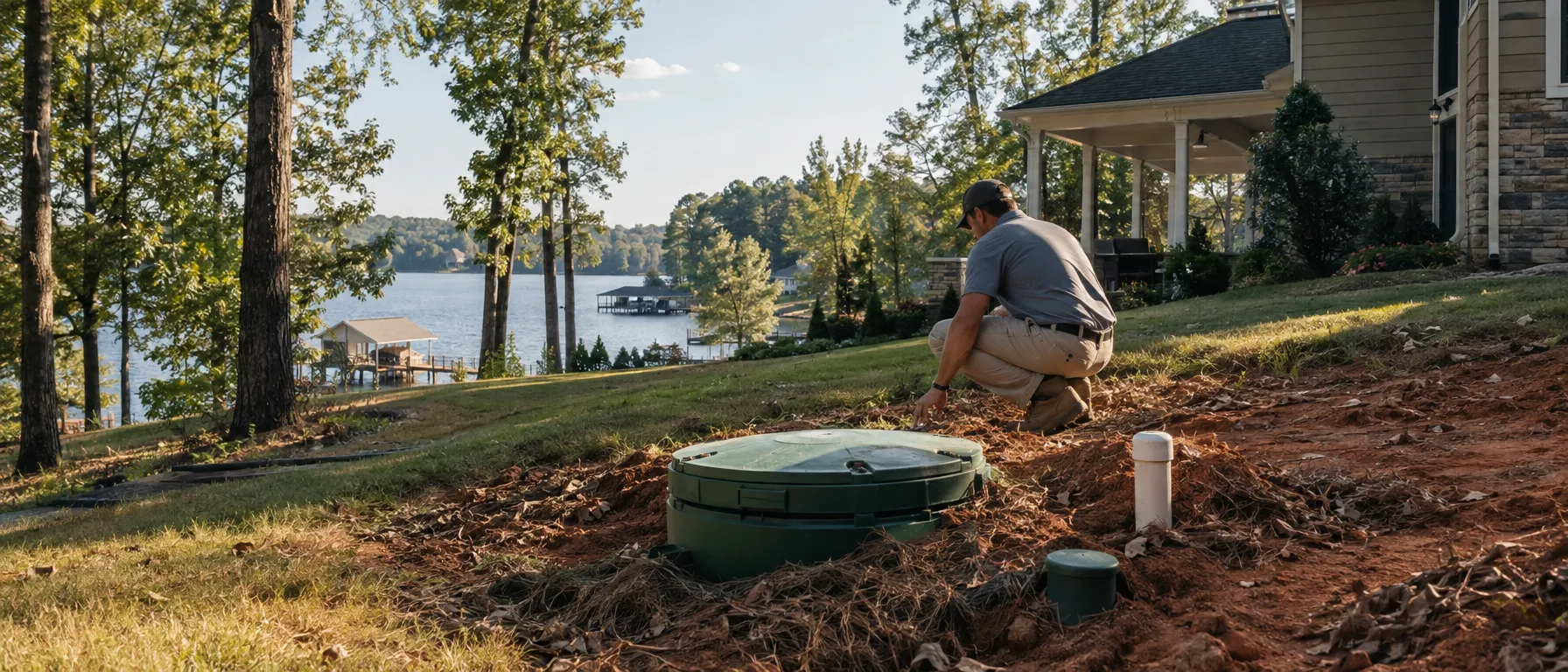
1. Start with the septic records for the Denver property
When buying a home with septic in Denver, NC, the question is not simply whether the toilets flush. You need to know what was approved, what is installed, how it is performing, and whether it can support your intended use. A system that serves the current household may still constrain an addition, pool, or extra bedroom.
Denver is unincorporated, and properties in Denver, Lincoln County, fall under county governance rather than a Town of Denver government. Confirm the parcel's jurisdiction, especially when searching by a mailing address or broad real-estate location label. For a Lincoln County property, start with Lincoln County Environmental Health for septic records and questions about the applicable review process.
Request the complete available file using the parcel identification number and street address. Older files may use a previous address, owner name, or parcel configuration. Ask staff to explain which documents establish the approved use and whether the file includes later repairs or modifications. A missing online record is a reason to investigate, not proof that no permit exists.
- Ask for available site evaluations, permits, approved plans, installation records, and final authorization documents.
- Request records of approved repairs, expansions, or changes in system type.
- Compare the documents with the seller's disclosures and maintenance records; flag discrepancies for follow-up.
2. Check septic bedroom capacity against the home's actual use
For residential septic approvals, bedroom count is an important design factor. Do not assume the number of bedrooms in a listing matches the septic authorization. A finished bonus room, basement suite, or converted office deserves closer review if it is marketed or intended as sleeping space.
Ask Environmental Health to confirm the approved bedroom capacity and explain how your proposed layout would be evaluated. The seller's household size does not establish the system's permitted capacity. Likewise, calling a room an office does not automatically settle how it will be treated in a permit review.
Compare three things: the septic documentation, the present floor plan, and any building permits for additions or conversions. If they do not align, obtain clarification before relying on the home's advertised room count. A general home inspection does not establish septic capacity or resolve permitting discrepancies.
Think beyond move-in day. If you expect to finish an upstairs room or create a separate living space, describe that plan explicitly to the county. Additional plumbing, bedrooms, or dwelling units may require review; whether an existing system can accommodate them depends on the approved design and site conditions.
3. Locate the septic tank, drainfield, and repair area
A septic system occupies more of the property than the tank lid suggests. Depending on its design, it may include treatment components, pumps, distribution equipment, a drainfield, and an area intended for future repair or replacement. Their locations can materially affect how you use the yard.
Ask a qualified professional to locate the relevant components and compare them with available records. A sketch in an older file may not be a precise survey. Property boundaries, easements, and the relationship between system components and proposed improvements may require a surveyor's help.
For a Lake Norman property, do not treat an open lawn between the house and water as automatically buildable. Septic constraints may intersect with slope, drainage, shoreline requirements, and other development restrictions. County septic review does not replace any separate shoreline or building approvals that apply.
Bring a simple drawing of your intended pool, garage, patio, driveway, or addition to the review process. Ask what must remain undisturbed and what setbacks apply. Do not assume that unused-looking land is available for construction, or that a drainfield can be relocated elsewhere on the lot.
- Where are the existing treatment and dispersal components?
- Is a repair or replacement area documented, and has anything encroached on it?
- Do any components cross a property line or rely on a recorded easement?
- Could the planned improvement interfere with access, drainage, required setbacks, or suitable soil?
4. Arrange a septic inspection during your buying timeline
Arrange a dedicated septic inspection rather than assuming the general home inspection covers the system. Verify the provider's current North Carolina credentials and that they are appropriate for the work. Ask whether the inspector has experience with the installed system type, particularly if it includes pumps or advanced treatment equipment.
Get the scope in writing. An inspection may involve reviewing records, locating components, opening accessible tanks, checking visible condition, testing mechanical equipment, and evaluating signs of drainage problems. The appropriate procedures depend on the system and conditions. Ask what will not be inspected and how inaccessible components will be handled.
Coordinate any pumping with the inspector instead of ordering it independently immediately before the visit. Pumping can be useful or necessary, but its timing can affect what the inspector observes. A pumping receipt alone is not a condition report or a guarantee that the drainfield works.
Book early enough to receive the written report, investigate findings, and obtain further evaluations within your contract timeline. Ask your real-estate agent and closing attorney how unresolved issues interact with your agreement. If the home is vacant or lightly occupied, ask how limited recent use affects the inspection's conclusions.
5. Read septic findings as decisions, not just defects
A useful report should distinguish observations from conclusions and identify limitations. A damaged lid, an inoperative alarm, and evidence of wastewater surfacing are not interchangeable findings. Ask which items involve safety, which need maintenance or repair, and which call for further evaluation of the system or site.
No inspection can promise that a buried system will never fail. Conversely, an older system should not be judged solely by age. Records, observed condition, operating history, system type, and site constraints all matter. Ask the inspector to explain the evidence behind each recommendation.
If corrective work is recommended, find out whether county approval is required before accepting a proposed solution. A contractor's estimate is not necessarily confirmation that a repair design will be permitted. Seek a written scope that identifies required approvals, access needs, restoration work, and any unresolved assumptions.
Keep the financial decision separate from the technical one. A seller credit may help address an expense, but it does not create a suitable replacement area or establish permission to expand the system. Resolve feasibility questions before treating a negotiated allowance as the entire answer.
6. Understand septic maintenance before moving to Denver
Ask the seller for pumping receipts, service contracts, repair invoices, alarm history, and any operating instructions. Missing records do not prove failure, but they leave gaps that your inspection and follow-up questions should address. Confirm whether the installed system requires ongoing professional service or monitoring.
There is no single maintenance schedule suitable for every household and system. Ask the qualified provider to recommend a schedule based on the equipment, tank condition, occupancy, and usage. If pumps or controls are present, learn what their indicators mean and what to do during an alarm or power outage.
Day-to-day habits matter. Avoid flushing wipes or disposing of grease through household drains, address leaking fixtures, and spread heavy water use rather than concentrating it unnecessarily. Keep vehicles and heavy loads away from protected system areas. Before changing landscaping or directing runoff, check that the work will not damage components or overload the drainfield.
7. Build a septic decision file before closing
The goal is a coherent property file, not a stack of unrelated receipts. Before closing, you should be able to explain the approved capacity, approximate component locations, current findings, maintenance obligations, and any limitations affecting your plans.
If someone suggests that public sewer will eventually solve a septic limitation, verify that separately with the relevant utility. A nearby line does not by itself establish connection availability, capacity, permission, or cost. Do not base a purchase on an unconfirmed future connection.
A septic-served home can suit your needs well when its documented use, condition, and site constraints align with your plans. Where a key question remains unanswered, identify who can resolve it and what evidence you need before proceeding.
- Save the county file and written clarification of any capacity discrepancies.
- Keep the inspection report, photographs, and documentation of completed corrective work.
- Retain component-location information and any relevant recorded easements.
- Write down maintenance contacts, service requirements, and alarm-response instructions.
- Document any remaining approvals needed for your planned improvements.
Questions
- How do I find septic permits for a house in Denver, NC?
- For a property in Lincoln County, contact Lincoln County Environmental Health with the street address and parcel identification number. Ask for the full available septic file, including later repairs or expansions. If records are incomplete, ask whether earlier owner names or parcel information could help locate them. Confirm jurisdiction before requesting records.
- Does a home inspection include a septic inspection?
- Do not assume it does. Read the home inspector's agreement and arrange a separate septic evaluation when needed. Confirm the septic provider's qualifications, inspection scope, access requirements, and reporting process. Ask specifically whether mechanical equipment and drainfield conditions are evaluated, and what limitations may prevent a complete assessment.
- Can I add a bedroom to a Denver home with septic?
- Possibly, but first confirm the system's approved bedroom capacity and ask Lincoln County Environmental Health how the proposed change must be reviewed. Existing performance does not establish approval for additional bedrooms. Depending on the site and design, an expansion may require further evaluation, system changes, or approvals that are not guaranteed.
- Can I build a pool in a yard with a septic system?
- It depends on the pool location, system layout, repair area, required setbacks, and other property restrictions. Locate the septic components before finalizing a design, and have the proposed layout reviewed by the appropriate county staff and professionals. An open part of the yard may still be needed for wastewater treatment or future repair.
- Should a septic tank be pumped before a buyer's inspection?
- Coordinate the timing with the septic inspector. Pumping may be part of the evaluation, but pumping immediately beforehand without coordination can affect the conditions available to observe. Ask the inspector what sequence is appropriate for that system. A recently pumped tank does not, by itself, demonstrate that the entire system is functioning properly.